A garden of sweet aromas is transporting, fragrant flowers bring an impact to the senses that make a lasting memory. Spring is especially rich in heavenly scents. Fragrance is at its height from spring through summer when the plant world is in great competition for the pollination of their flowers, and that makes the garden a heavenly place for the rest of us.
Why The Importance of Smell?
If we are astute in our choices we can compound the aromatic and fragrant scents even more so in a garden. This is something I have aimed for in my gardening for many years. And even when there have been years that the place has looked a little shabby from obligatory neglect, I still have had the joy of scented plants to remind me why I love the garden so much.
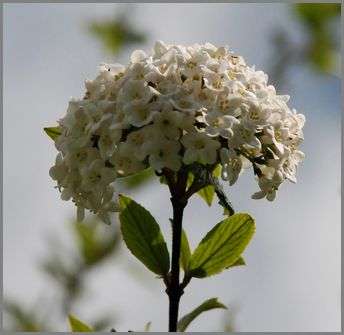
V. carlesii
Beware of descriptions which confuse fragrance with aroma and recommend plants that might well be unpleasant to your nose! Not everyone has the same “tastes” in deciding what smells good and what doesn’t. Listed here are those that the vast majority of people would agree are welcome pleasures.
When a Latin plant name includes the descriptor “odoratum”, be sure that a distinction of the plant is a pleasant scent.
Here are ideas on how to make a fragrant garden, some plants renowned for their pleasant odor, and where to plant them for the most pleasure.
Some notes on olfactory pleasures…
Fragrant Shrubs You Will Love
Lonicera Fragrantissima, the ‘Winter’ honeysuckle, is the first noticeable aroma – often in earliest spring. A sweet lemon scent wafts through the air when nothing else seems in bloom, from tiny pale yellow blossoms. Many disdain this shrub because of its ungainly growth pattern, but I wouldn’t be without it. It does sometimes suffer dieback, and I have twice in twenty plus years cut it to its base to rejuvenate it. Lilacs have similar types of drawbacks, but scent seems to make up for the liabilities.
Winter HoneysuckleMentioning lilacs, they have been some of the most Proustian of scent memories for generations. Indoors they are almost overpowering, but on the air nothing says spring to a cold climate garden like the lilac family in bloom. Although the Latin name is not as lilting as “lilac”, it might help to know it is Syringa vulgaris.
Koren Spicebush is of all scents and shrubs my most favorite. I love it more than all the other Viburnums which, in this august family of shrubs, is saying a lot. The fresh, sweet fragrance lasts over a long period and is very free on the air, filling your garden with a delightful smell. I have mine planted by a doorway, just as a long-ago garden book recommended to me – I highly advise anyone to do the same. It is a shrub easily pruned to any space, or espaliered on a wall, which gives it dooryard appeal. Viburnum carlesii comes in named varieties.
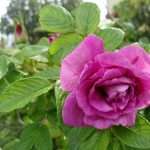
Viburnum carlesiiRoses, of course, but not all roses are scented. I personally don’t like roses which are not aromatic, unless they have a whole list of other features that counter this great lack, such as the ‘Green Ice’ rose. And of all the ways a rose can scent a garden, my most favorite is the apple smell of the Eglantine‘s leaves. Few grow a rose for its foliage, but this is the exception to the rule. Its beauty of scent is indescribably lovely just after a rain.
If you can’t have orange blossoms, as we in the North do not, then at least the mock oranges can give June its orange blossom notes. Philadelphus of different named varieties, is a bit ungainly in form, but with beautiful early summer flowers. I planted a Philadelphus coronarius ‘Aurea’, but it has never been happy here in my rural garden. From growing experience in my city plot, the conditions I think are important for the good health and happiness of this shrub are: organic matter, regular moisture, and regular feeding. It sulks if you neglect it.
Later in the season, if you have the conditions for it, Clethra alnifolia “Paniculata” – the sweet pepper bush is a desirable addition to your yard. I tried several times to grow it, but I lost it, it needed more moisture and acidity. It is covered with little spikes of bloom that fragrance the garden in summer. If you have moist, acid soil give Clethra alnifolia a try.
Others with a sweet reputation:
- Buddleia davidii
- Hamamelis mollis
- Magnolias
- Apple fruit trees
- Daphne odora
- Ribes odoratum
Short List of the Most Heavenly Scented Roses
-

- Therese Bugnet
-
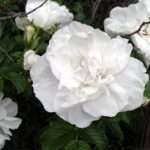
- Blanc de Double de Coubert

-
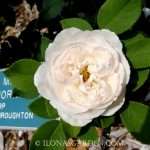
- Charles De Mills
-
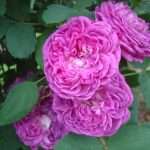
- Reine de Violettes
-
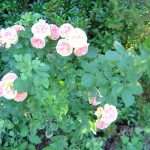
- Alchymist Rose
-
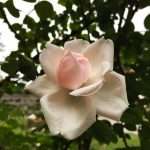
- New Dawn
-
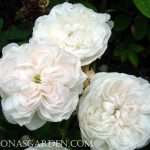
- She would have grown old fashioned roses like ‘Madame Hardy’
-
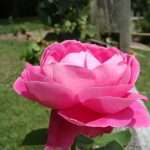
- Paul Neyron
-
- Rose and Clematis

- ‘Mister Lincoln’, hybrid tea
- ‘Fragrant Cloud’, hybrid tea
- ‘Granada’, hybrid tea
- ‘Tiffany’,hybrid tea
- Blanc Double de Coubert, rugosa
- Thérèse Bugnet, rugosa
- David Austin roses
- Many of the ‘Old Roses’: Gallicas, Bourbons, Albas, Musk
Sweet Aroma On A Vines
The first to come to mind are the Honeysuckles. The Lonicera periclymenum ‘Belgica’, Dutch honeysuckle, is a very good one, and the Goldflame honeysuckle (Lonicera x heckrottii) smells lovely, but is sometimes plagued with pests (aphids). ’Serotina’ is supposed to be the later type of Dutch honeysuckle. They all have that famous sweet honeysuckle smell in the evening. And, yes, taste sweet when you suck the nectar out of the end of the trumpet. (Did you also do this as a child?)
People usually grow Clematis for the bright and showy blooms, but they are also a fragrant flower. I first noticed it when I grew ‘Nelly Moser’ and ‘Jackmani Superba‘ on a trellis together. The species types, such as the autumn and the C.montana are famous for filling the garden with sweet scent upon the air. The Autumn clematis (Clematis ternifolia) smells distinctly like fresh, powdery soap, and the C. Montana is distinctly vanilla “enhanced”.
Other fragrant vines:
Jasmines
Wisteria
Perfumed Perennials
See the Summer Fragrance Page
Phlox paniculata -Garden Phlox
Paeonias
Lilies (Oriental)
Pinks, Carnations
Convallaria majalis – Lily of the Valley
Hesperis matronalis – Dame’s Rocket
Other fragrant plants:
[Many herbs are aromatic – see Herb Plant List]
Hyacinths
Annuals For Scent
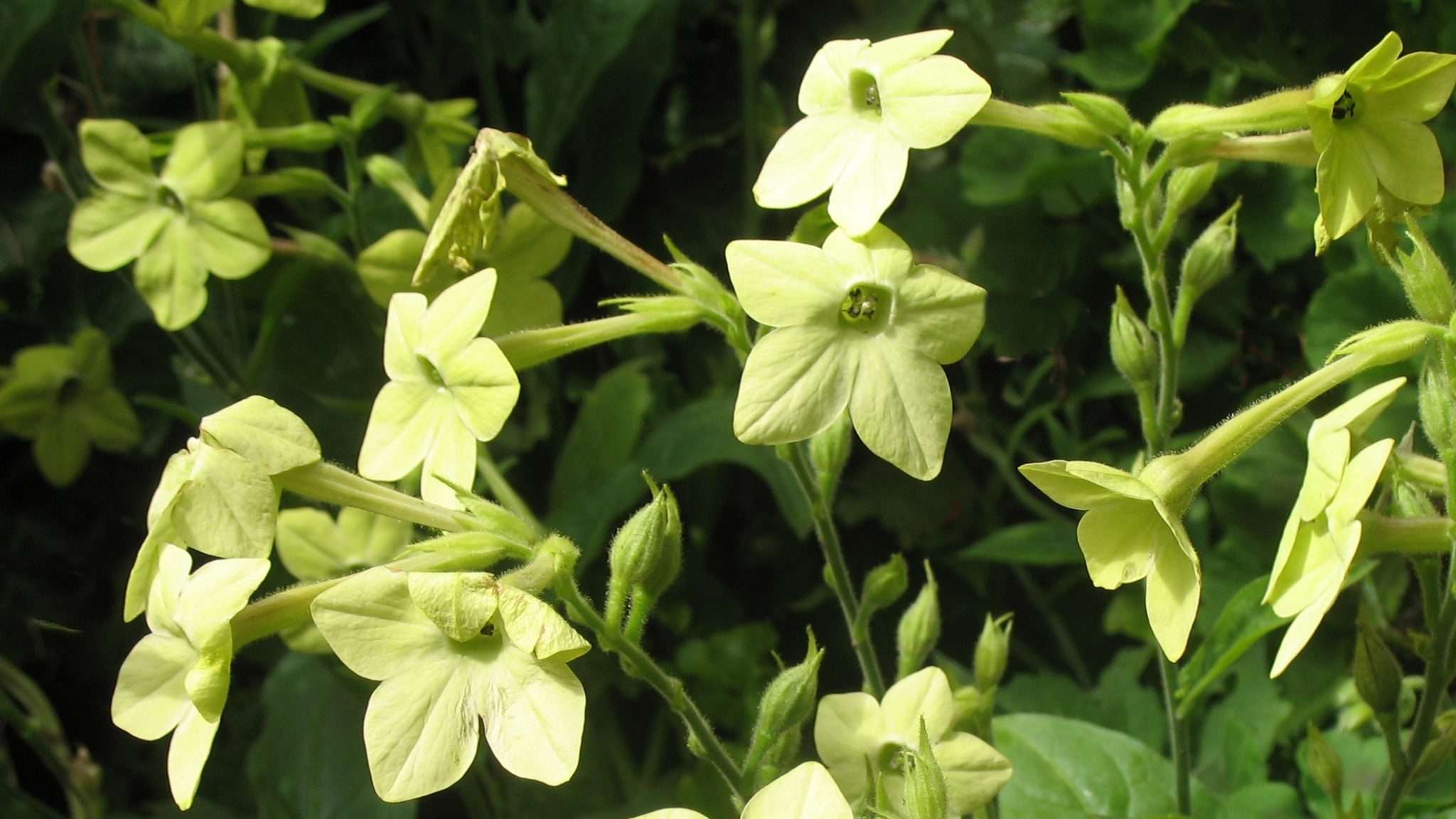
Nicotiana
Artemisia annua – Sweet Annie
Reseda odorata – Mignonette
Nicotiana – Flowering Tobacco
Heliotrope
Matthiola longipetala – Night Scented Stock
Purple Petunias
Sweet Peas
Malcolmia maritima – Virginian stock
Mirabilis jalapa – Four-O’Clocks
Other fragrant plants:
Polianthes tuberosa -Tuberose
Tuberoses were my mother’s favoirte indoor plant -she carried them in her wedding bouquet.
Where Do You Want To Plant Them?
Nearby, or in the Path of Prevailing Breezes
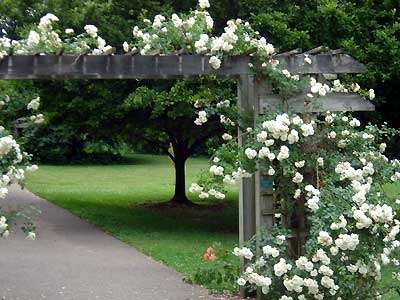
By a doorway
Everyday you can pass through a doorway area and during growing season have a whiff of something lovely.
By the front gate
What a welcome to be greeted by aroma of roses, or lilacs, or any other fragrant scent.
By a bench
Taking a breather from garden work, or enjoying some time with a friend, the accompanying fragrance of sweet flowers is refreshing and restful.
Where you step
Have you ever stepped on thymes between stepping stones or brushed up against mints? Then you know what a release of volatile oils fills the air around you.
Under the window
So many fragrantplants have flowers high up in the air- tall shrubs, vines, climbing roses… and these are perfect for under a window. If you can open your window to fresh breezes, why not let them be perfumed with aromatic scents?
In your containers
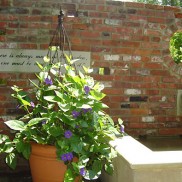
We usually consider containers ways of making bright spots of color as movable feasts for the eye, why not expand that idea to include good scents?
Fragrant plants can create bouquets
The Victorian practice of making little nosegay bouquets, called tussie mussies, is a romantic way to use your fragrant flowers. You can even use the Language of Flowers to create a secret message.
The Illustrated Language of Flowers