With the idea of moving into the Atlanta area, a task I'm looking forward to is learning about plants for landscaping an urban or suburban yard in Zone 7b. Already familiar with azaleas, it is time to discover the wide range of wonderful plant material that thrives in this part of the state of Georgia.
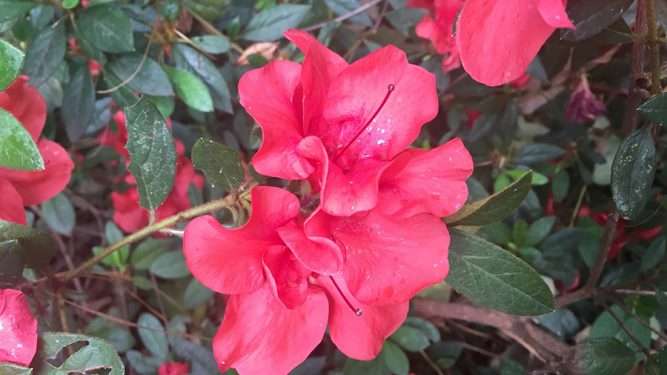
As this is a prelude to creating a garden, this post will look over some shrubs common to many yards while noting their growing requirements and mature sizes.
6 Common Southern Shrubs
Foliage shrubs are foundational (in more ways than one) to a landscape where space is at a premium and a sense of enclosure or framing is wanted. Basic design principles apply in planning the space, but an elementary knowledge of desirable plants will help a gardener navigate those tempting plant nursery aisles.
Gold Dust Aucuba
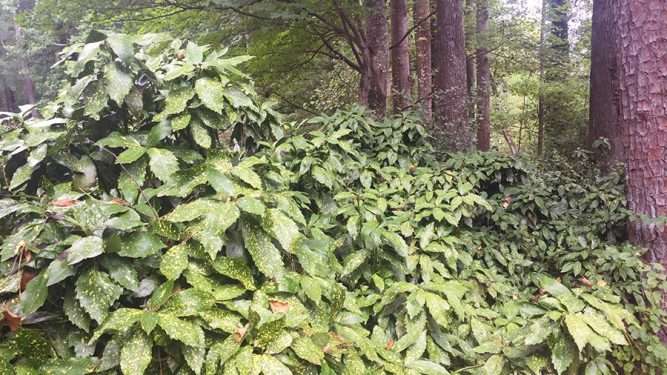
I see this in many yards. With the tall trees giving welcome shade, this shade loving and drought tolerant bush looks good in every situation. The glossy green leaves are sprinkled with gold flecks and clothe branches to the ground for excellent boundary line shrubbery.
- Zones 7 - 10
- Full to part shade; avoid afternoon sun
- Well drained soil
- Drought tolerant, once established
- Prune in spring; fertilize 3-4 times a year
- Grows 8' by 6'
- Multiply by divisions
ACUBA "Gold Dust" ('Aucuba Japonica variegata) - Bright Green Foliage Speckled with Gold. Buy 2 #1 gallon pots
Pittosporum 'Tobira'
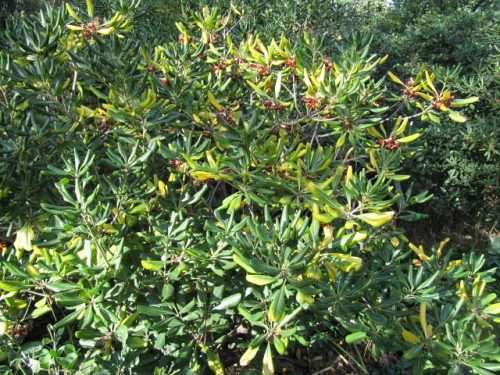
Pittosporum Tobira 'Variegata' Buy 2 3 Gallon Plants
Low-growing cultivars with glossy evergreen leaves and occasional fragrant flowers? I know I could find a place for this beauty. While needing some TLC such as to avoid overhead watering, the versatility of Pittosporum bushes could meet many conditions in hot climates, in both sun and shade.
- Another shrub needing good drainage
- Zones 7 - 10
- 12' by 8' dense growth
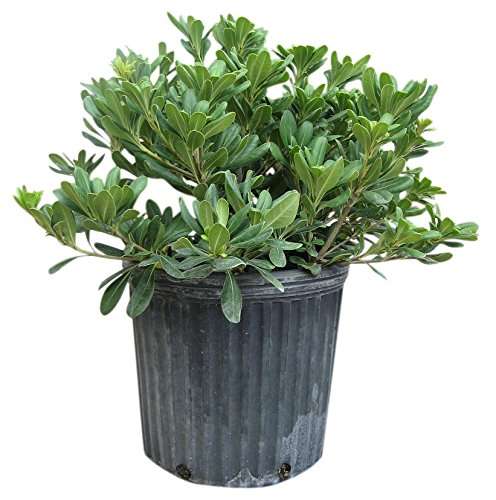
Buy Your Shrub in a Larger Size
On Amazon, this shrub is available in a 3 gallon size. 1 Extra Large 3 Gallon Plant | Pittosporum Tobira
'Purple Pixie' Dwarf Weeping Loropetalum
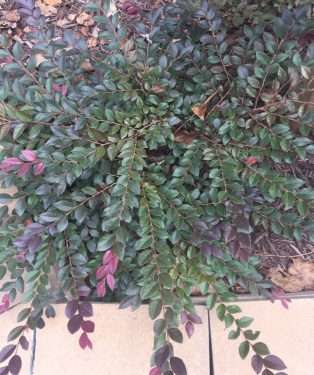
Great plant for growing on a slope to prevent erosion. Buy on Amazon if you don't see it at your local nursery. This variety, 'Purple Pixie' has a naturally compact shape and requires minimal pruning. But the feature most important to me is deer resistance. It might survive the frequent deer visits to my yard.
I seem to have a weakness for weeping plants, and a fascination for purple leaved plants. Purple foliage with pink flowers on this plant will create a subtle contrast with green plants and a sharper one with golden leaves. I think I would like to see it in combination with silver leaved herbaceous plants.
- Zones 7 - 10
- 2' by 5'
- Sun to part sun
- Rich organic soil with medium water
During this fall I found this variety of Loropetalum for sale at Lowes in Atlanta. While not experienced with finding plants in this city, I was struck by how few plants are offered in the fall. I went to a nursery and a couple big box stores, and while there were loads of mums, almost no perennials. More shrubs were offered, but most of them were the most common.
Planting Your New Shrubs
When planting your new shrub be aware of and patient for the mature sizes when situating your plants. Too often immature plants are placed where they grow way too large for the space.
In the photo of the dwarf Loropetalum under its heading, it was one of two plants in a small area underneath a mailbox. Yes, these plants looked beautiful in that place when young and newly planted, but the best use of a shrub that can be up to five feet wide would be to use one, not two plants.
Additionally, placement behind the mailbox planting bed would be better for the long term. Otherwise, the shrub plantings will constantly require severe pruning or removal when outgrowing their allotted space.
Autumn is one of the best times for planting shrubs.
Daphne Odora
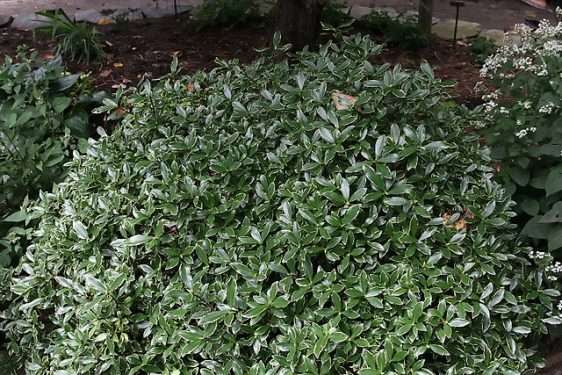
Photo by David J. Stang CC 4.0
I love fragrant plants. One that was always on the list of desirable plants outside of Ohio's cold climate zones would be the fragrant winter daphne. Perhaps not an ideal plant, it may be short-lived, yet it is a beautiful shrub given the right conditions. Becomes a dense, mounding evergreen with early spring flowers.
Oh yes, it is toxic; so may not be suitable for gardens visited by children or pets.
- Sun to partial shade
- Moist, well-drained soil with good drainage
- 4' by 4'
- Zones 7 - 9
Osmanthus Heterophyllus 'Goshiki'
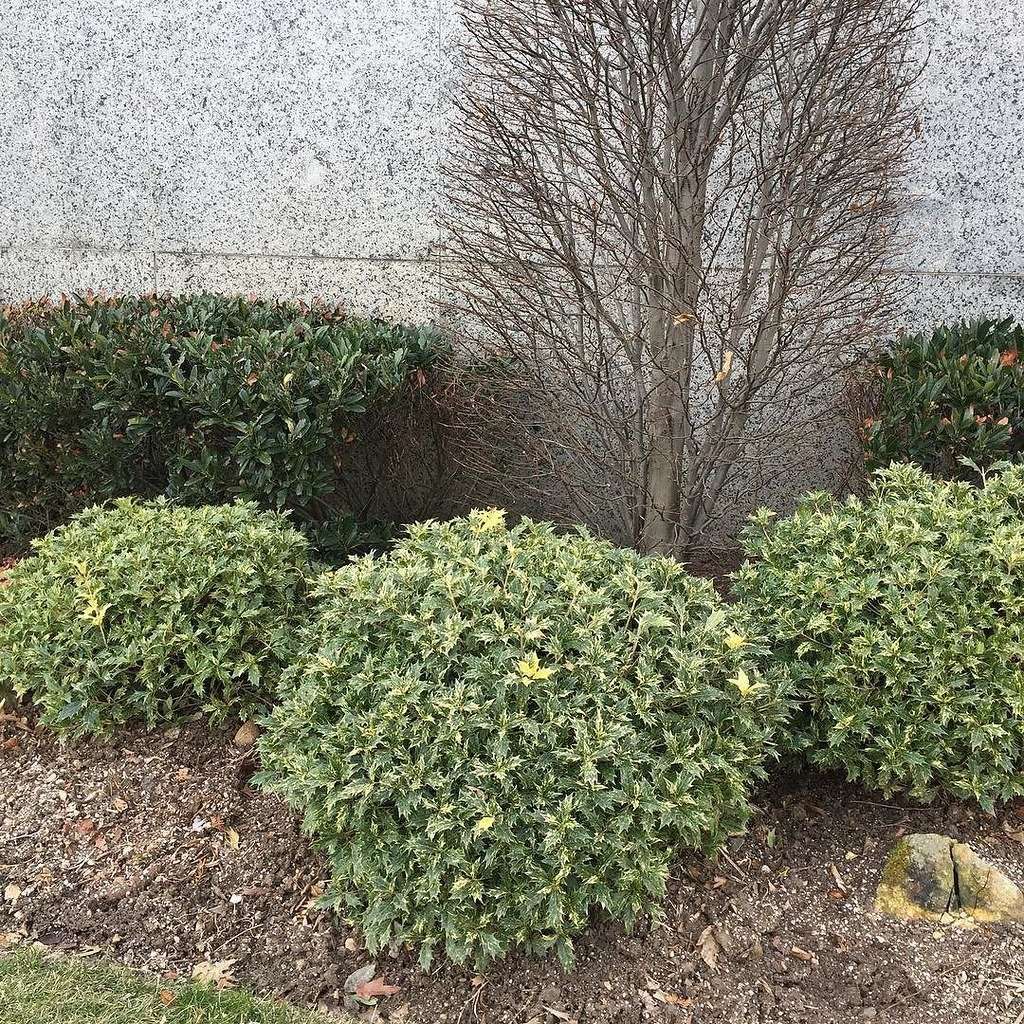
Sometimes known as a "False Holly" due to its prickly juvenile foliage, this variety of Osmanthus heterophyllus comes in calico colors of cream, copper to gold, and green. It will bring color variety in an upright oval shape.
- Zones 6 - 9
- Full sun to full shade
- Drought tolerant with occasional deep watering
- 10' by 8'
Mountain Pepper, Drimys lanceolata
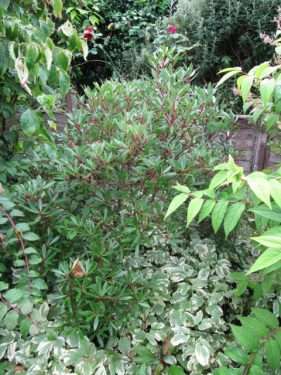
Here is a shrub you can eat. The leaves and berries have a spicy, peppery flavor for an added benefit to its landscape value. A large, but easy care, plant with reddish stems and petioles to harmonize with any burgundy leaved bushes or ornamental trees nearby.
The Mountain Pepper shrub will take hedging well, but has medium moisture needs to keep in mind. Coming from the rainforests of "Down Under", means watering regularly during dry spells.
- Zones 7 ( with shelter) -10
- Part to full sun
- Plants are dioecious like hollies, and need male and female to set fruit.
- Matures at 10' to 8' (or less)
Keep Following This Exploration
This begins the discovery of plants to populate a new gardened landscape in the vicinity of Atlanta, Georgia. I see so many yards that have little thought for the rich choices that can beautiful and simplify a landscape.
Is there little variety of plants available in stores because of a lack of consumer interest or ignorance or is it the other way around? My experience is that when we enliven our yard with interesting and beautiful plants, it is catching! Soon, your neighborhood starts to show signs of others taking notes and creating their own unique landscape.