Snowdrops
So often we overlook the simple, and go for the garish, and we are especially prone to that mistake when choosing spring bulbs. Admittedly, I love the bright yellows, reds, pinks, and blues as much as anyone, but there is something distinctly pleasing about demure little Snowdrops, or Galanthus nivalis, as they are known botanically.
Grown in gardens at least from 1875, these are appropriate for heirloom plots and restorations.

Snowdrops can also be forced in winter.
Earliest Flower Of Spring
for me, the snowdrops are the earliest flower to appear, although in mild years thay may be preempted by the Hellebore niger, Christmas roses. Since they are small flwers, like crocus or eranthis, plant lots of them, doing your best to encourage multiplication.
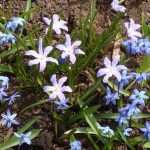
The milky white flowers hold their own against frost and snow, and do well under shrubs. Quite tolerant of many garden conditions.
3 Important Things To Know About Snowdrops
- Zone 3-7 means they are quite hardy
- Snowdrops appreciate moisture, so plant deeply (perhaps up to six inches deep) in well-drained, rich, humus-y soil
- There is a double form, and more than 500 cultivars of this spring bulb.
Observations
Looks at Home In Semi-Woodland
One of the ways these minor bulbs look at their very best in at the verge of the woodland, or a part of the garden that mimics such a look. Trees and shrubs with some open shade, an azalea walk, or a shrubbery of spring-blooming viburnums or something similar.
Snowdrops do open very early in spring, so timing to coincide with blooming shrubs would be those which are called “late winter” like the Witch hazels. Sometimes it is a bit tricky to get Spring flowers to bloom together, and what co-operates in one year might not in another. You can’t go wrong if you simply naturalize a whole lot of these beauties all in one glorious group, and that may be the very best plan of all.
How Snowdrops are Grown
For a full description and growing information see the Galanthus nivalis page.
Galanthus Nivalis Garden Guide
Good growing practices:
Try not to let the bulbs dry out during summer’s drought. If moving them, lift while the leaves are still green and with a bit of soil around them.
Galanthus don’t especially like being moved, and may some time to settle back in.
Garden Styles
Heirloom Gardens
Bulb combinations, especially very early flowering ones, including Eranthis and Iris Reticulata are not only lovely, but historically appropriate for many heritage gardens.
Spring Gardens
An entire section of the yard can be used to highlight the spring season. It will be a showstopper when ornamental trees and shrubs, groundcovers, and flowering bulbs are all timed to bloom during the spring. Instead of spots of color spread out in many places, bring a symphony of scent and color into a designated space, which can be followed with calming green of foliage and shade later. (Hostas and daylilies are ideal bulb garden covers).
Woodland
Bring a season of floral beauty into the woodland areas. Deciduous trees and shrubs allow sunshine to enter the garden when bulbs are actively growing and blooming, then shelter them from the heat of summer when dormant. A classic garden area for spring bloomers like Galanthus nivalis.
Plant Facts
Fun Facts
There is something of a growing fanaticism, or enthusiasm, in collecting different types and named variants of the humble little snowdrop, nowadays. Whether the prize is a double flowered type or one named “G. nivalis ‘Blonde Inge'”, it has become a personal challenge for some collectors to grow many of these and have a long blooming season of them.
The Greek words gala (milk) and anthis (flower) combine to give the genus its name describing the milky white color of the blooms.
Native to areas of Southern Europe to Asia Minor.
More Snowdrop Plant InfoAdditional resources
Resource for snowdrop bulbs