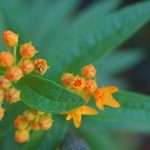
Once, Asclepsias syriaca, or Milkweed as it is commonly known, was a field plant of waste or fallow ground. A weed of wild and unkempt places which delighted only children who were fascinated by the silky down of the open boat-shaped pods. Now, with the decline of the Monarch butterflies, their favored food source, Asclepias syriaca is going mainstream into gardens.
The Butterfly Weed, another member of the Asclepsias family, has always been included due to its bright orange flowers and garden worthy habit, but how might we use its more ungainly relative, the Common Milkweed, in our yards? I learned a bit more about it, and some of those facts might surprise you as they have me.
Butterfly Weed ProfileAsclepias Syriaca
Native to most of the eastern US and eastern Canada.

Common Milkweed in old botanical illustration
- Zones 4a-9b
- Full sun to part shade
- Height: 4 – 6 feet
- Width: 2 – 3 ft
- Blooms early to mid summer
- Average moisture
Plant Description
Tall and ungainly, the leaves are coarse with the look of a Rubber plant. Overall of pale coloring: pale green leaves and stems, with flesh pink balls of blossom.
Although not a standout for color or form, they give vertical interest and their seedpods are beautiful.
Milkweed Brings the Garden to Life
I took this field weed for granted, and tolerated a scattering of plants in my yard in the past, but here are facts that inspire me to look for larger plantations of it in my increasingly wild gardens. It is support for Monarch butterflies, but also for bees and other beneficial insects. However, Monarchs cannot survive without it.
Since helping these butterflies is one of the main reasons to grow it, facts about them are included with growing information.
Monarch butterflies Love Milkweed

Monarch butterfly on milkweed
- Caterpillars only eat milkweed plants: “Monarch larvae are specialist herbivores of plants in the family Asclepiadaceae (milkweeds)” *1
- The gravid females look for a stand, rather than single plants. Laying small amounts of eggs on each one.
- Females prefer to oviposit on plants that have intermediate levels of the milkweed cardenolide toxin. A. syriacus is one of those species.
How to Plant Asclepsia Spp. Seeds
- Cold treat seeds before planting, if necessary.
- Scatter milkweed seeds 1/4-1/2 inches apart on the soil surface
- Cover with another 1/4 inch of soil.
- Keep moist after sowing
- A. syriaca germinate poorly at temperatures which are greater than 85ËšF.
The easiest way to vernalize (cold-treat) seeds is to plant in the fall. Nature will then stratify the seeds naturally through the winter.
Best Way to Increase Plants?
They may be divided, or grown in pots and transplanted, but scattering seed in the fall is one of the easiest ways in Central Ohio. Cultivate the ground and then allow nature to do its work.
Companions For Milkweeds
Since other nectar sources are important for the health and nurture of the Monarchs, a small meadow or prairie area is an ideal way to grow your stand of Asclepsias. Here is my list of the top 10 planting companions:
- Mistflower, Conoclinium coelestinum
- Sunflowers, Helianthus annuus
- Culver’s Root, Veronicastrum virginicum
- Blazing Star, Liatris spicata
- Ohio Horsemint, Blephilia ciliata
- Dwarf Larkspur, Delphinium tricorne
- Coneflowers, Echinacea purpurea
- Garden Phlox, Phlox paniculata
- New England Aster, Symphyotrichum novae-angliae
- Virginia Bluebells, Mertensia virginica
There are many more like Coreopsis, Rattelsnake Master, Monardas, so many of the prairie and meadow plants that could populate a small wildlife patch in the garden, or an old fashioned field verge.
Use in the Garden
Called a weed for reason, it is a coarse plant, and not traditionally part of a garden. Today in New American style and with the use of ornamental grasses, incorporation into an attractive design is easier. I grow it around my little garden pond, and here are a few ideas for including it into your own yard.
- A prairie or meadow spot
- In a border by a fence
- As part of an English hedgerow
- In any semi-wild planting
- Back of the border
- In rough grassed areas
Seed Resources:
Common Milkweed Seeds and Plants
Buy Asclepsias on Amazon