English cottage garden style is not for everyone. Find out whether this charming look is for you—and whether to modify it or forego it altogether. By learning more about this quintessential English garden style you can decide whether to create your garden in this manner or simply enjoy it in others.

A cottage-style garden can be truly wonderful, but the design isn’t the best fit for every yard.
5 Key Characteristics of an English Cottage Garden
- Hardscape details: A picket fence, an iron gate, a brick or stone pathway, and a traditional arched arbor can instantly create the feeling of a quaint, old-time garden. Benches, flower urns, other garden accessories and structures heighten the sense of style underpinning the plantings.
- An abundance of plants: “Abundance,” “exuberance,” and “jumbled” are all words to describe the way the plants fill and overflow the flowerbeds. Be sure to use enough of one type of plant to give a full look without a confused look at the odds and ends of plants tossed together. There is a method to the madness of such places: make drifts of grouped plants in odd numbers like five or seven.
- Roses: The planting scheme will benefit from the addition of roses. The heritage/heirloom types with many petals or, conversely, simple single roses, especially. Climbing and shrub types give the architectural grace that was seen around these traditional homes.
- Careful maintenance: Intensively cultivated, regular maintenance of plants, soil and weeding is needed when flowers are grown this way. This nostalgic style is a labor of love!
- Traditional architecture: The look best matches traditional architecture, like Cape Cod, English Tudor, and other such homes. Reconciling the sleeker, modern-style homes is more of a challenge. It will require some modification to meld the house with its surroundings.

Get advice on how to determine if the English cottage garden style is a good fit for your yard
Cottage-Style Design
This style is informal—with plants tumbling over each other and the fences and walkways that try to contain them.

With its outdoor rooms in English style, Sissinghurst is well known for this design full of well-thought plantings.
Cottage Garden Look Speaks of Simpler Times
What’s the secret to designing these charming spaces?
Everybody loves the quaint cottage gardens they see in pictures or happily chance to visit. There is something warm and welcoming about the traditional ones that remind us of simpler times, grandmother’s borders, full of an overflow of flowers and fruits to gather on a summer’s day.
Landscape Questions
However, let’s ask ourselves a few things before we dig in and endeavor to create an English cottage style garden.
- How easy is it to create or care for one?
- Does this landscape match the style of your home?
- Will it work to tuck one into a corner if at odds with the house facade?
Such outdoor spaces have certain plants that give the style its own unmistakable look. These are rooted in the history of England’s farmers and villagers. Will those plants match the landscape needs of your site?
Garden Design BasicsDiscover: Suitability for Your Site
Let’s walk together into these quaint front yards, through their gates and around their pathways.
Maybe such a plan is perfect for your own home landscape. Or if not, you can enjoy this guided tour through an old-time enclosure fairly bursting with fruits, flowering bushes and fragrant blooms. Certainly, a place to dream about . . . but is it the one for your home?

A lovely cottage garden path
Historical Background of the Cottage Style in England
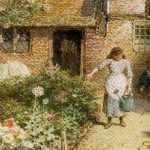
These were originally the food and flower patch of everyday farming people, those who worked on other people’s lands but had a little house and yard of their own.
- They were small, practical plots meant for feeding and supporting the family.
- They were intensively cultivated; every little plant was placed cheek by jowl to make the best use of the small space afforded. Mixed plantings that combined fruit trees, small fruits, medicinal and culinary herbs, and a few pretty things thrown in for the love of it.
- Originally these areas adjacent to the house were meant to be low maintenance, with the main effort dedicated to the kitchen vegetables and fruits.
- It is only in relatively modern times that the “tidy mess” became a complicated endeavor of constant flowering.
As the Victorian era reached a frenzy of decoration and love of the exotic and the oddity, there grew a hunger for these more humble flowerbed designs. Quietly maintained by country folk who had remained unchanged by the whims of fashion, influential gardeners took notice.
William Robinson, Tastemaker
A tastemaker, William Robinson, wrote passionately about these older types of gardens and their simpler flowers and abundant plantings.
Gertrude Jekyll joined the movement, which swept away the bedding and parterres to a large degree and implemented their ideals of a picturesque and more artistically natural feel of style.

English roses and clematis grow up around the stone dwelling.
How This Style Developed
Many of what we call an “English garden” have a distinctive form of naturalistic planting that takes its cue from the old dwellings of small English villages.
The English style can vary widely from the grand, sweeping estates of the landscape movement of Capability Brown to the more “gardenesque” styles of the Victorian age. They also include this form, the English cottage style, which we love so well.
Edwardians Needed a More Natural Look
The growth of the middle class coincided with the popular sentiment to create a home with a garden that included the natural look of the old familiar flowers. The rigid regimentation of plants in rows, bedding out, or tightly manicured flower beds gave way to the more romantic freedom of William Robinson’s vision.
William Robinson wrote “The Wild Gardener” and changed the appearance of English gardening forever afterwards. He persuasively argued for the old-fashioned flowers and planting style of the traditional cottagers. It revived and became the iconic look that we equate with British landscape design today.

In full bloom in Hemingford Abbots, Cambridgeshire
Rooted in England
An English cottage garden is …
- A place filled with plants jostling each other for pride of place, outdoing each other with blooms. They regale us with their joie de vivre as they burst forth from the earth, woven together and entwined in each other’s arms, scenting the air freely with rose, honeysuckle, and lily. This is what most of us think of as the ideal flower garden.
- Usually, a smaller space enclosure surrounded by a fence. It is often punctuated with straight paths on an axis, the main one leading directly to the front door, which is draped with climbing rose or clematis vines.
- A food garden, if grown traditionally, and fruits are grown to delicious ripeness, while carpets of thyme can be seen among the stepping stones and along the path, perhaps with a seat of its own.
Edible and Sustainable
Renewed interest in “edible” and “sustainable” may return these grounds to their roots. Places where the beauty of plants and their usefulness, once more, go hand in hand.
They were grown by common hardworking people, but who still aspired to beauty in the best manner that they could contrive and afford. Most of this style was considered passé during the times that they were actively created and used.
Contemporary House Design With an Old-Fashioned Garden

A modern home can show off tradition by harmonizing the surroundings with the architecture.
The modern form of this look is almost always a flowery one. While vegetables might be welcome, they are rarely included when designing such a plan. But with today’s trends, it could be time to return to the former methods of growing herbs, vegetables and flowers all together.
Incorporate Food Plants
With the new emphasis on edibles in the front yard, it might be time to incorporate more of salads and herbs into the streetside landscape plans if this is your desired style. They can be almost hidden among the blooming plants, with some of the colored foliage of lettuces or chard actually adding bright color.
Selection of Location
Two good places in the landscape for such plantings might be a small area by the door, an entry area enclosed with a fence, or a border next to the driveway.

Cleome, Cosmos, Begonia, Nicotiana syvestris, Allyssum, Coreopsis
Harmonize Home and Yard
Most homes will harmonize with this style, but a strongly contemporary one with modern lines may be visually jarring. It has a feeling that the two aren’t knit together properly. While Cape Cod style and traditional bungalows seem made for the simple cloud-like drifts of flowers and vines that comprise a proper cottage garden.
- Generally, if you have a picket fence, you can have this sort of border! Rustic-looking fences and Craftsman-styled houses will look ideal with this abundance of plants.
- Not for the front yard? Make a personal space hidden away in the backyard.
- It is a tried and true method to make outdoor “rooms”, sectioned off areas of the landscape to create a different sort of design from those adjacent.
- Utilize bushes, either a shrubbery or hedge, and create your version of the style in a compartment of its own. This is one way to have your cake and eat it, too, when the house is a style that looks jarring with an overflow of flowering plants. Your own personal bower.
Is This Style for You?
Don’t let the simplicity of the look fool you. These are intensively cultivated properties that require a good deal of attention and labor from the gardener. Someone who has time to work in the flowerbeds and among the vegetables, pruning the fruit trees and keeping everything healthy and in good order. Does that describe you?
It isn’t an easy or maintenance-free sort of yard.
However, it is a beautiful, rewarding one.
Best Tip: Start Small
Choose an area right outside the door, or along the entry path, and begin planting a mix of herbs, annuals and low-growing perennials.
Welcoming Feeling, Well-Spaced Growth
The plants of these quaint plots seem to be on close and friendly terms, grown as closely as possible while still given space for optimum growth.
Thus, it is important to remember that plants that are too close create conditions ripe for disease. A way the English cottage style garden accomplishes good use of space is by using techniques such as vertical growing: arches and trellises.
- Weakened plants are struggling to get enough nutrients and moisture.
- Air space for circulation around each plant is also desirable to keep plants growing their best.
Let your abundant flowers come from healthy, well-placed plants and not from stuffing too many plants in a cramped space. Grow upwards or use other space saving methods such as espalier

Border of perennial plants only seems effortless. It requires careful planning and regular care.
Right Plants in the Right Place
Just what makes a plant “the right one”?
Besides being suitable for your climate and soil conditions, ease of care is a factor for a busy homeowner. Plants that remain healthy without coddling, sprays, or dividing are a boon.
These qualities won’t turn this high-maintenance style into a low-demand type, but it will increase its practicality for modern homeowners.
Which Perennials Are Good Choices?
Start out with stalwarts like iris, peonies, and hardy roses, include good fillers like daisies and baby’s breath (Gypsophila) and then add the accents of spires and spiky foliage plants to give height and vertical interest to the planting.
Another way to design it: choose a basic central group of flower forms and then add some from other groups to spice it up. Basic groups of flowers might be those with a daisy form, or those with a lily form, perhaps accenting with iris forms or spires of lupines.
Include the Versatile Daisy Family
The daisy group of flower forms, called the Compositae, is the largest category with an inexhaustible number of plants, including the sunflower and aster, as well as daisy groups of blooms. Many of the Compositae group make wonderful flower bed choices, with abundant growth and a cheerful look.

One of the most famous of this style is the garden of Monet.
Plants Rule
Vines drape gates, arbors and fences. Drifts of flowers fill the spaces, they are abundant and blowzy. The plants rule here! If you decided that this is the look for you, it is time to pick the herbaceous plants, shrubs and trees to grow.

Delphinium for height, mounding daisies for form and the daylily anchors the design with color and contrast.
Hemerocallis for Busy Gardeners
Daylilies (Hemerocallis) make perfect plants for traditional yet easy-care landscapes.
That makes them a great choice for today. Hardy, without disease problems, in an ever-increasing color range and form, heights, and bloom times. Hybridizers and homeowners love them because they are so accommodating to those who love both beauty and good landscaping qualities.
Easy, Long-Lived, Colorful
Hemerocallis can solve many design problems: like what to plant in the shade or near a roadway.
Once acquainted with them, you can combine the different heights and bloom periods to give a spot of color or a large drift that never seems out of bloom. The trick is to stagger the expected bloom schedule.
The daylily will bring a burst of color during the time when most of us don’t want to slave outdoors.
- Have a shady area?
- Need color for most of the summer?
- Don’t want to have to follow a special list of maintenance tasks?
Daylilies are today’s landscape choice for their healthy foliage and cheerful blooms.
Consider making this perennial the backbone of your flower bed. Combine them with spires and daisy shape blooms for contrast.
Use Annuals for Bursts of Bloom
Easy to grow flowers: just sow and grow. Find the perfect ones for a corner spot, even if you can’t give over the entire yard to this type of gardening. Many books list varieties to look for: start with nigella, calendula, and Shirley Poppies.

A plentiful overflow of flowers in containers add to the full and lush look.
Classic Design Principles
“All about charm and character, still they rely on the same basic principles as any other style. Start by creating a basic shape of hard landscaping, then add ‘core’ trees, shrubs and perennials that give the landscape its personality. Leave the fine detail until last.”
Putting the Forms Together
Different forms like spires, mounds, and vining plants are used in blocks or drifts, with no less than three to five plants of the same type together. Hollyhocks and sunflowers give height, while phlox paniculata or daylilies provide color, and larkspurs or foxgloves give a vertical line for variation.
Don’t be dotty about it; place groupings for the best effect with contrasts of form and texture.

Designing and Creating a Cottage Garden: How to cultivate a garden full of flowers, herbs, trees, fruit, vegetables and livestock, with 300 inspirational photographs
Photos say it all when it comes to how it should appear, but you may also want some information on just which plants give the look. This guide gives much more detail for those who wish authenticity. Most books just tell you about the “idea”, this one gives an overall view and how-to in making a complete Cottager’s dream. This may not be the newest book on the topic, but it is one of my favorites because it covers a wide range of the old Village life.

Add a Welcoming Gate
An inviting gate will give form to the entrance and a frame for abundant flowers within. Details like arbors, fences, pathways and gates give evocative focal points to plantings in the English Cottage garden.
Create an authentic feeling with an inviting gate entry. Pickets, lattice and supports will all evoke the traditional yards of yesteryear when such boundaries were an important protection of the cottager’s kitchen vegetables and simples.
Rose-Covered Arch
One of the most iconic features is a rose-covered arch leading from the front walk to the door or as an entry into another part of the property. It was a Gertrude Jekyll favorite, to include in her designs along with specific suggestions on just which climbing roses to add. (Roses were almost always the plant of choice).

A flower-covered gate is an inviting touch.
Today gardeners have a much easier time choosing a desirable climber from the world-famous breeding of David Austin. He creates roses that have the form and fragrance of the heirlooms, but with the blooming qualities of the modern ones.
Such simple structures give so much charm to a landscape.
Vintage accessories help create the right atmosphere, along with the plants and hardscaping.
The Heirloom Plants
Heirlooms are the ones that originally populated the old places. Passed on through generations, saved for their qualities that ranged from flowers of unusual colors to produce of exceptional taste.
A Full-Blown Shrub Rose Anchors the Plan
‘Carding Mill‘ is a variety that will quickly make a bushy, rounded shrub up to 4 feet tall. This full shape is what makes a great heirloom rose.
A myrrh fragrance and many-petaled blooms are the old-fashioned part of this rose, while the all-season blooms and warm apricot color are products of modern breeding.
Today’s shrub roses are bred to give healthy foliage, shrub qualities, and a long season of bloom. These are not the spindly hybrid teas that need coddling and constant spraying.
Include at least one in your plan.
Abraham Darby Is a Prime Candidate for Entries


One of the most recommended shrub-style roses has to be the ‘Abraham Darby‘ English Rose.
Nothing blooms for a longer season than rose bushes. Consider pairing them with daisies and campanulas for a cheerful bed of long-lasting blooms.
This Rose Has Fragrance, Presence and Beauty
This variety is one of the more hardy and healthy varieties of the David Austin English Roses. Fruity fragrance and good health make it a winner. Shrub roses are one of the major plants to make a garden of this type look authentic and traditional.
Gardening is the art that uses flowers and plants as paint,
and the soil and sky as canvas.
— Elizabeth Murray
How-to Videos for DIY Features
Video instruction on how to make your own thyme seat is perfectly charming!
The idea of a thyme bench has always fascinated me—although in my climate the frequent rains and otherwise inclement weather challenges the wisdom of it. Still, it would be a marvelous addition for a place with plenty of mild days in which to sit and enjoy the scene from a fragrant bench.
The many tutorials on growing plants, planning, and combining colorful blossoms abounds online and in your local library. It is easy to create this type of landscaping, if you decide it is for you.
Fruit or Flowering Trees? Or Both?
Ornamental trees are smaller in mature size and provide seasonal color.
Smaller trees, especially if they are filled with fragrant spring blooms, are ideal plantings for a cottage-style place.
Choose Dwarf Trees for Smaller Spaces
If you are interested in harvesting fruit, there are many dwarf varieties to choose from. Barring that, the art of espalier reduces the size of a tree while generating perfect conditions for fruit. They are labor-intensive with particular care to the pruning techniques.
Most homeowners would be happiest with small ornamental trees because they allow more sun and nutrients to be available for plantings surrounding them. Fruit trees require a great deal of care in terms of spraying, pruning, harvesting, which isn’t ideal if only a landscaping feature is desirable. However, they are of the utmost priority if you wish to provide for your table.

A small lemon tree.
Add Color, Fragrance, Taste
Cherries
Cherry trees are ideal. They bear fruit, they are full of spring blooms, and they make handsome trees with year-round interest with their shiny, mahogany-colored bark. If you have a large enough yard you may grow a sweet cherry that is self-fertile like the ‘Stella’ variety, otherwise it is best to plant one of the tart pie cherry trees.
Pears
If you like pears, chose one of the dwarf varieties that have a reputation to taste good. They are pretty and bloom abundantly in the spring. Don’t plant where dropping fruit would create a problem, such as near a driveway.
Peaches
Peach trees are available in smaller sizes, and they need consistent pruning for optimal fruit production. Remember their large soft fruits and don’t plant where they could be a nuisance. They have a lovely pink bloom in the spring and come in dwarf sizes for smaller spaces.
Birds Love Fruits, Too
While these suggestions would be an authentic feature, for some modern landscapes and schedules an ornamental tree is best. Crabapple, dogwood, berried shrubs, could stand in for mentioned fruit trees.
Fruits can be messy, and if you are not interested in harvesting the produce, there is limited reason to put up with the care that they need.
Practical Tips for the English Cottage Style
The Old-Fashioned Flowers
Many of these heirloom plants are easy to grow and care for, that is one of their attractions.
A few practical tips:
- Choosing the right plants, and cultivating them well, is important.
- With some guidance and your own loving labors, you will soon make a scene like this bloom outside your own windows. Visually rewarding, they are a great showcase for the person who loves to put time into their yard.
- Perennial plants are the backbone of a beautiful, lasting design, and a good resource book is almost as important a tool as your spade.
- Learn how to put together a plan with charm and an English village look: videos and books help with the ideas and layouts. Remember that plants can be moved around when the results don’t look as planned. Have some fun with the process.
More Garden Adventures (Links)
- 10 Best Perennial Plants for Anyone’s GardenThese top 10 perennials are among the best, most colorful, perennial garden plants. They grow in a wide range of conditions and have proven reliable for generations of gardeners.
- Bird Feeders and an Inviting Habitat Bring Avian Friends to the GardenFeeding the birds can be good for them and entertaining for you. Learn about good bird feeders and making your yard a friendly habitat.
Details Liven Up Your Spot of Earth
Considerations that help create this picturesque style:
Chickens for an English Cottage Style Garden?
My grandmother raised chickens in her urban garden. In those days, most people did, if they could spare the room. It is an idea making its way back around.
Urban places are making room for chickens, and they can be a natural part of the cottage garden, too. Their eggs are welcome, and they forage for insects. Chickens do need care, and they must be controlled—both from bothering neighbors and from overzealously scratching around in the flowers. Despite those considerations, many people are finding they love raising some hens in their backyard.
Keep Track of Plants and Plans With a Journal
A garden is a growing thing and plans help keep it going in the right direction. A journal organizes your plans, pictures, ideas and keeps track of what you have planted and whether it succeeded or not. Simple notebooks can be used, but a binder, especially dedicated to your garden, holds everything for years!
Garden journals are a great way to keep track of your plans, plant names, costs and just about any information that is important to your gardening experience. Look for one, or make one with pockets (collecting seeds, this year?), handy forms and water-resistant covers.
Advice for Every Gardener
This is what I underline in all my advice to fellow gardeners, especially beginners: start small. You can always enlarge it, but if you are overwhelmed with work, weeds and failing plants, it is no longer fun, recreational or beautiful. Grow into your garden. More advice on designing your own yard: Make sure the soil is improved with plenty of humus.
Gear for Puttering Around
Tools and accessories are necessary for the work involved. They can add to the old fashioned flavor that makes this type of garden so charming. Consider everyday items such as watering cans or tool storage to be part of the entire look you are aiming for. Repurposing is certainly in the spirit of cottage gardening.
- Old rakes? Don’t throw them away. Turn them into a tool-hanging rack.
- Old worn-out wheelbarrow? The perfect plant container for lettuce or pretty annuals.
- Bathtubs and sinks? Water features. Or planters with just a little DIY addition of paint.
Such lush growing techniques intensively use the ground benefit from composters that not only save space but render the compost in record time. A very green thing to do, in the spirit of old-time cottagers.