A year with unusually cold temperatures is a good one to discuss hardiness of roses, and additions of Old Roses to your garden, because it has been so frigidly cold. Just because a rose is an heirloom does not always mean it is hardy enough for your climate. I found that out the hard way, after experiencing just such a harsh winter many years ago.
A normal zone 5 which plummets into territory of climates one to two zones colder often means losses for roses unless they are mulched and covered for protection. Some of the most beautiful old roses are not hardy for below zero temperatures when coupled with drying winds. Nevertheless, there are some which are hardy enough for even such brutal winters.
What is an Heirloom Rose?
Simply one that was grown many years ago. Roses propagated vegetatively from those grown before 1867, when the hybrid tea ‘La France’ was introduced. Later, in the frenzy to have roses that bloomed perpetually, and which conformed to ideals of blossom form and new colors, the old roses were largely lost to the garden trade. When interest regenerated, a search was made for as many of the old varieties as possible.
The result of those efforts are what we know as “old, heritage, or heirloom roses” today.
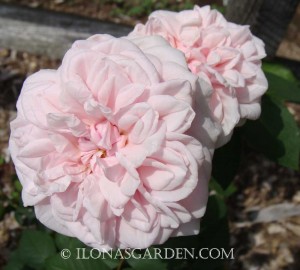
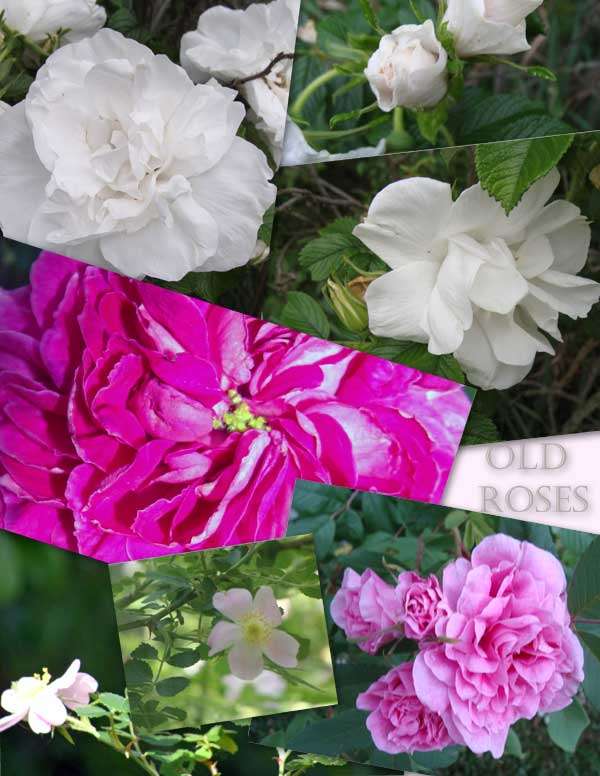
Full petaled old rose blooms are features of heirloom rose types.
I, too, became enamored with old roses and started planting many of them in what was then my new garden, on this property. They… and I… were happy for a number of years. Until an unusually frigid winter sent almost all the roses and two Chinese chestnut trees into the trash pile.
Harsh winters teach hard lessons, and now only the hardiest roses have a place at my house.
But there is something about the rich aromas of the petals, and sometimes the entire plant. Additionally, the harmony of the colors, the free way they flower, and the luxuriousness of the full blooms. The flowers are so crammed with petals that it seems almost impossible to have such fullness. I love the ones that become big arched shrubs, scenting the garden in a way only these are capable of doing.
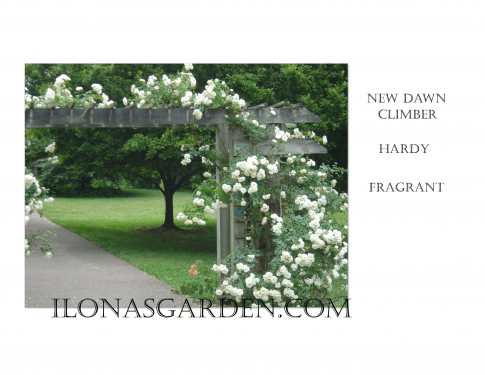
‘New Dawn’ is very hardy heirloom rose
A May or June morning with birdsong, sweet perfumes, and delightful cascades of pink and white color can seem very close to paradise.
Old Roses (and others) that Tolerate Frigid Temps
What were some of those memorial roses that remained in my garden after a cruel winter? Some Bourbons, Madame Isaac Pereire, Louise Odier, La Reine Victoria; an Alba, a Gallica, a couple David Austin roses (modern breeding with old rose form) are among those which were given places in the gardens. Only ‘The Mary Rose’ and the Gallica thrived, the others dwindled and were lost.
What survived? The ‘Alchymist’ climber, all of my Rugosas, ‘Kønigin von Dänemark’, ‘Charles De Mills’, ‘Zéphirine Drouhin’, David Austin’s ‘The Mary Rose’, and a couple of the coddled hybrid teas. ‘America’ climber and ‘Mr. Lincoln’ persisted.
But returning to our subject, Heirloom Roses, these are the ones you may wish to try in most parts of Ohio.
Tough Rugosa Roses Will Survive
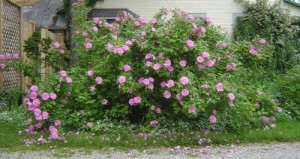
My Therese Bugnet, before I had to prune.
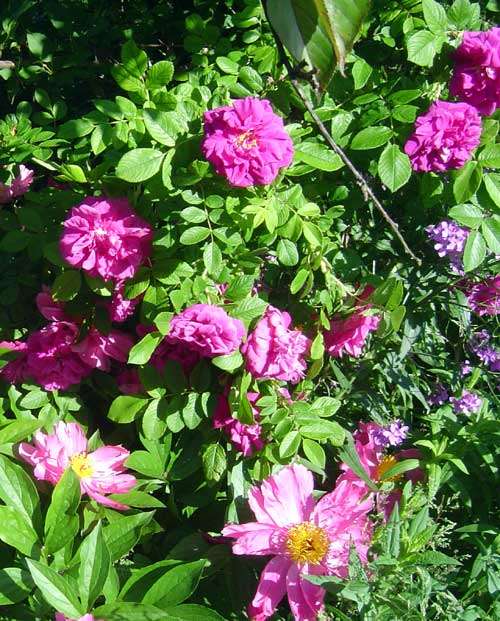
I have grown several Rugosa heritage roses for many years, and despite their prickly nature, these are the most reliable and beautiful shrubs in my garden.
The Albas
I grew ‘Königin von Dänemark’, and while she was beautiful, the “Queen of Denmark” did not thrive in my garden. for one thing, I had read that she would be fine in part sun. She did survive unhappily for a long time.
Don’t listen to advice that says any rose does well in part sun. If it is a very strong rose like ‘Blanc Double De Coubert’ it will tolerate those conditions, but roses love sun. Until you know how a rose will behave in your garden plant it with a full dose of sun in Northern climes.
More advice about Alba roses, this time from Berkeley Horticultural, is better to follow:
“it is essential that they not be pruned for at least 3 years after they are planted”
I do believe that with good care, full sun, and pride of place, this would be an excellent old rose for even my garden, and I am willing to try it again.
A Gallica Rose
Charles De Mills
The one Gallica I planted romps in my garden, “Charles de Mills” not just survived, he became intent on taking over the bed he was planted in and is threatening to jump the mown boundary given him. But he is darling when in his short spring bloom, so I like his presence.
Because of this rose’s nature, it is not for the fainthearted gardener or for  the small garden. At least that is my opinion. This Gallica does seem to desire climbing into my Fringe tree, so I am lackadaisically tying it in place hoping that it will pursue that train of thought. The smallish, fragrant deeply petaled (“extremely double” is one description of it) flowers are a soft wine color which fades as the bloom ages, which old roses ought to do.
If you adore fragrance, true old rose form, vigorous growth for a specific space… you will like this heirloom. Oh yes, consider that you will lots of petals for conserves, rose beads, or other uses if you plants this variety.
The Bourbons
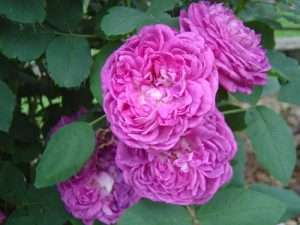 They were not fated to be a dynasty here, but if you can give these roses the situation and protection they need for survival, these are among the most sweet, lovely in form, and romantic of the heritage roses I grew. See, I have almost talked myself into breaking my own rule about planting only the hardiest of roses.
However, one Bourbon has done quite well for me. Zephirine Drouhin is called “the thornless rose” and is fragrant with long bloom time. With long canes, I train it up my lamp post during the growing season, but it must be treated something like a hybrid tea with pruning back for the winter.
This is truly a gorgeous rose, with a more modern look than some of the old roses, in color and form. The flowers are semi-double with a loose , carefree look to them, in a pretty bright pink. I think the foliage is fairly healthy, given the fact that I do not ever spray my rose bushes. Japanese beetles have become a problem, but they absolutely destroy other things in the garden and the roses seem to shrug them off with help from beetle bags in other parts of the garden.
If you have a plan to plant a rose on a fence, please consider the Zéphirine rose.
New Breed, Old Look
David Austin Roses
Of course, I was tempted. Who has not looked upon the heritage roses, drawn to their fragrance, their fullness, and found that a longer season of their qualities was lusted over? I confess. So when David Austin presented his beauties, I had to sample a few.
David Austin started his endeavors in bringing back the charming qualities of the old roses in more colors and repeat blooming after reading George Bunyard’s 1936 book of Old Roses. His ‘English Roses’ gained popularity and now have become the basis of one of the largest rose breeding programs in the world. Austin’s name is synonymous with English roses, which bear old rose characteristics.
Gallery of Heirloom Rose Beauty
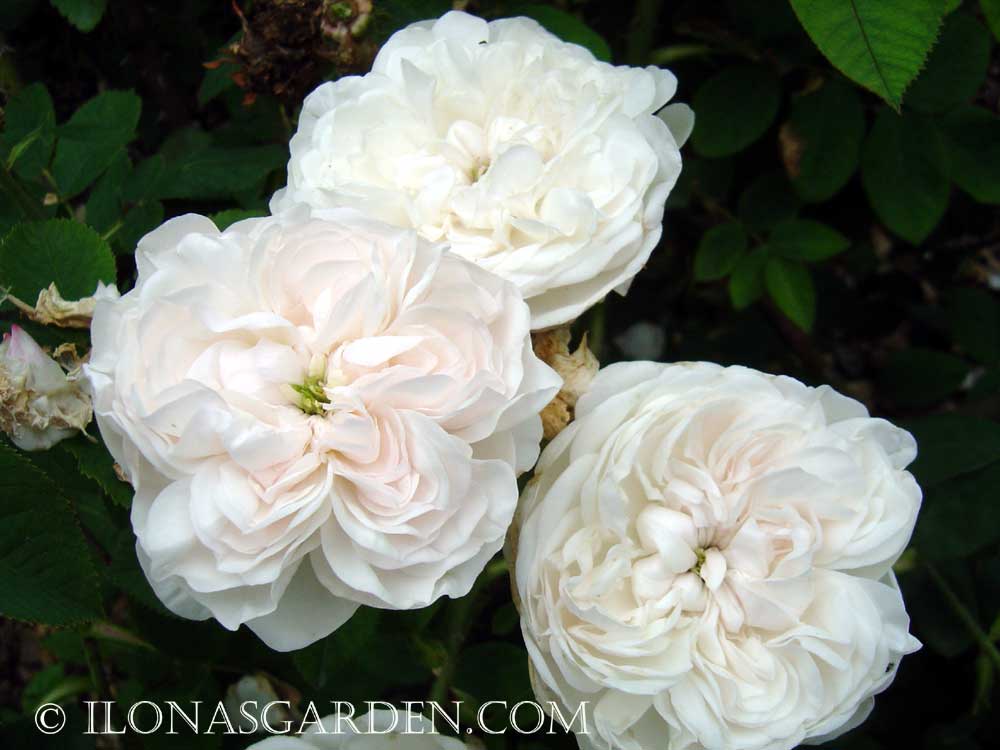
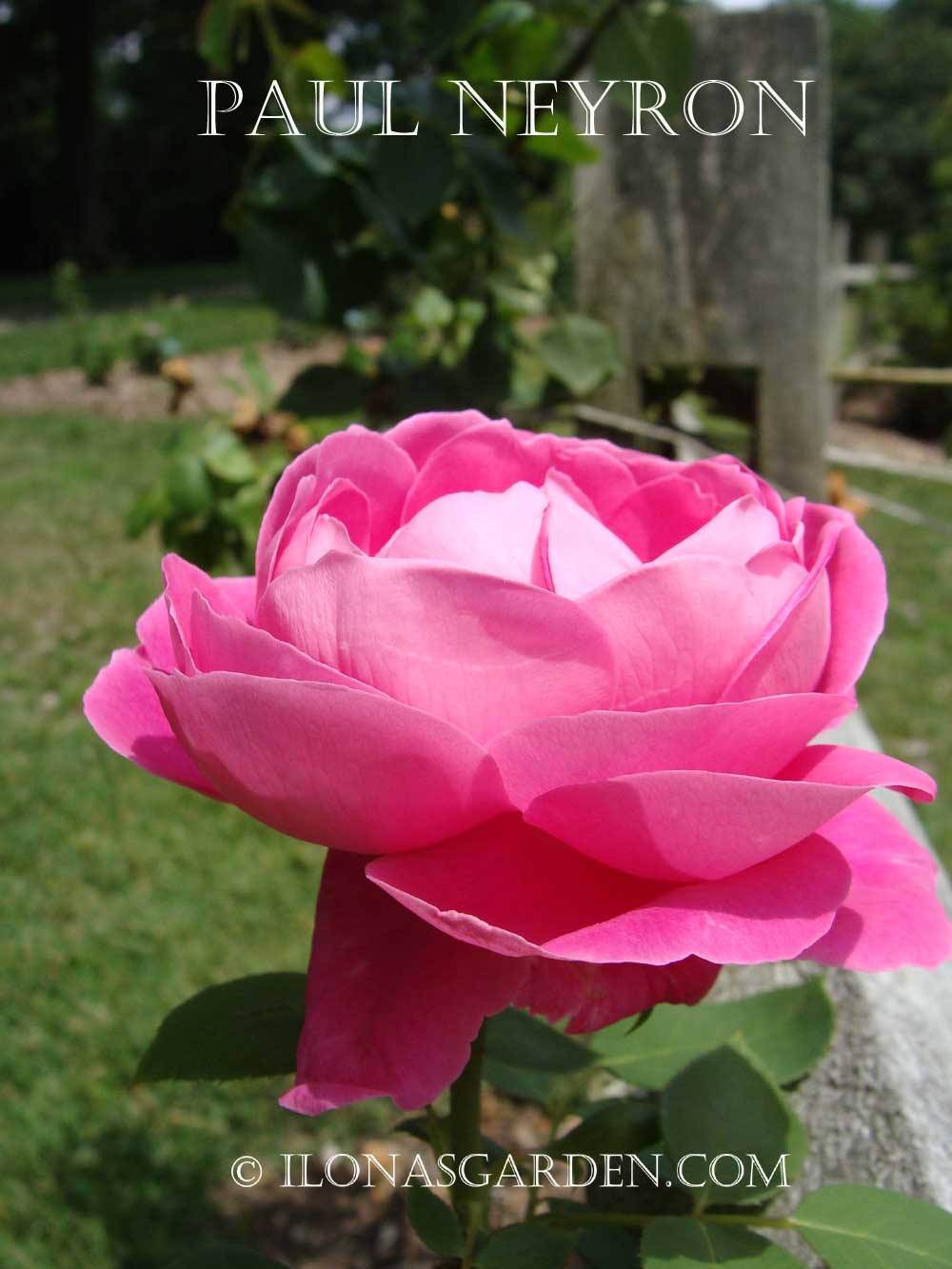
Visiting the upper reaches of the Whetstone Park of Roses, there is a quiet rose garden made entirely of these heritage varieties. The height of bloom is late spring instead of early June, when most roses are blooming. A good way to learn of rose shrubs, I photographed some; enjoy the gallery.
-

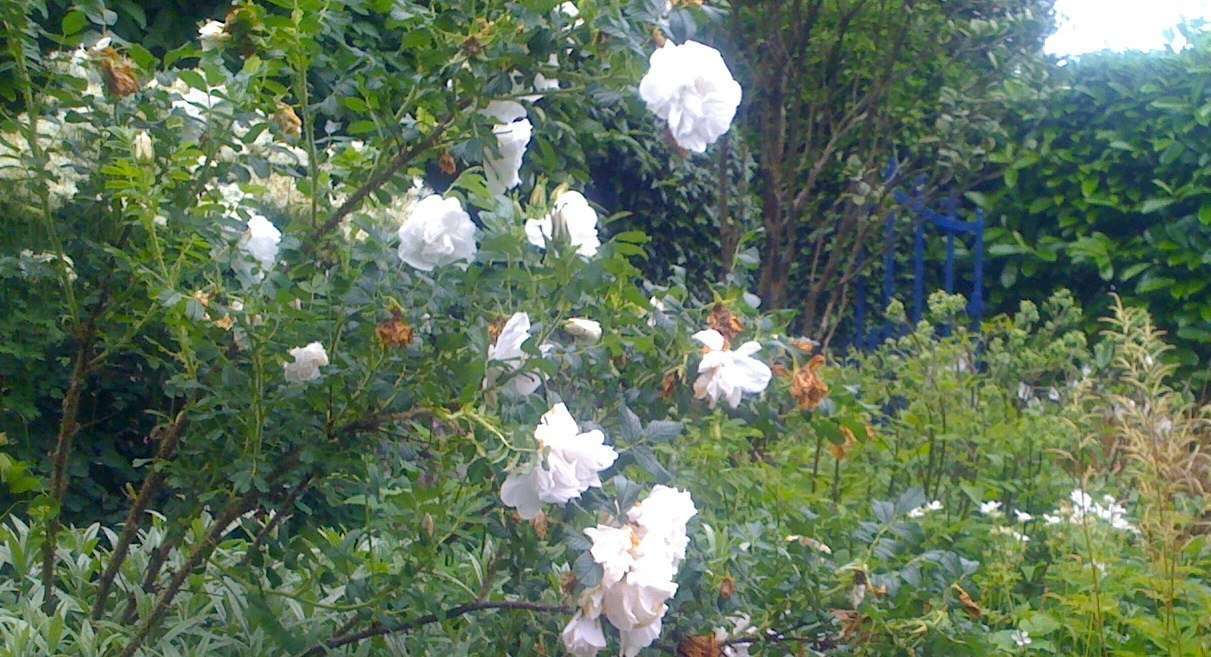
Blanc de Double de Coubert
-
-
-
She would have grown old fashioned roses like 'Madame Hardy'
-
Paul Neyron
-
-
Therese Bugnet
-
Old Roses: New Dawn
-

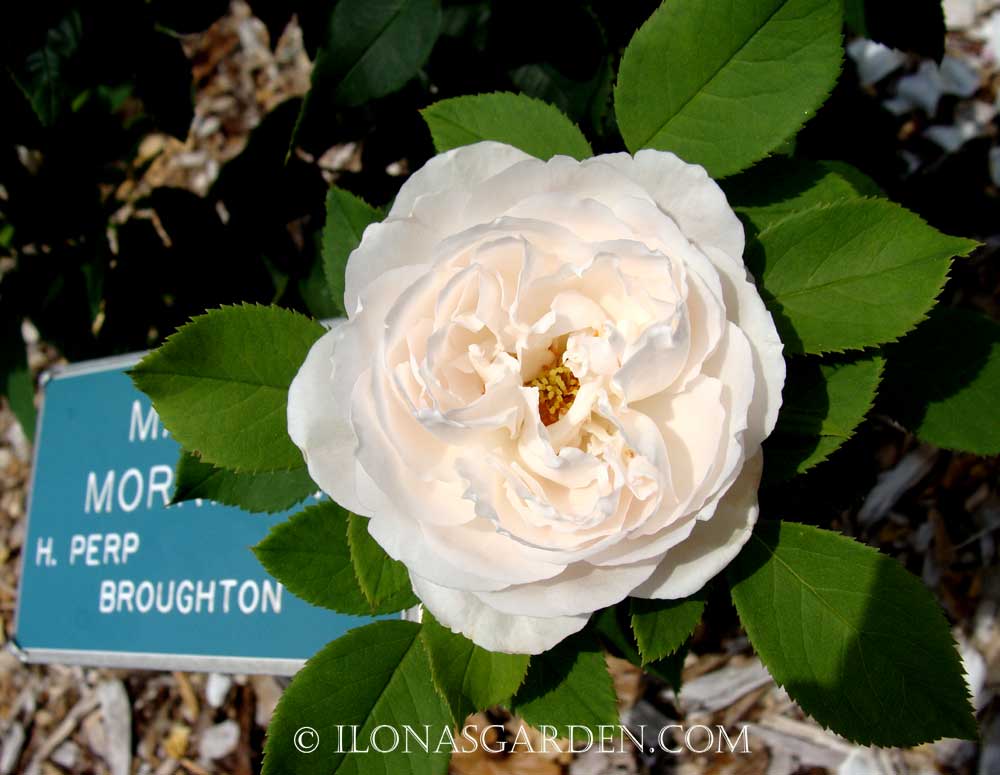


Of those I chose to plant, one has continued to live in the garden, ‘the Mary Rose’. She is rather neglected which is not fair, because the bloom and the sheer staying power of this rose deserves feeding and coddling. I might even be tempted to try more of Austin’s offerings once more. This time, starting with “Abraham Darby”.
Links
Pruning Old Roses
Madame Isaac Pereire in France
Some videos of Old roses growing in the Whetstone Park of Roses in Columbus, Ohio.
I made a video of my recent visit, but it was a bit early for the roses. The varieties seen were Harrison’s Yellow, Frau Dagmar Hartopp, and Blanc Double de Coubert…
Sources:
 Therese Bugnet Rose Shrub
Hansa Hybrid Rugosa Rose